Mullet Complete Guide: A Delicious Legend from Sea to Table
Nov 10, 2026
Leave a message
Get to Know This "Sea Jumping Champion"
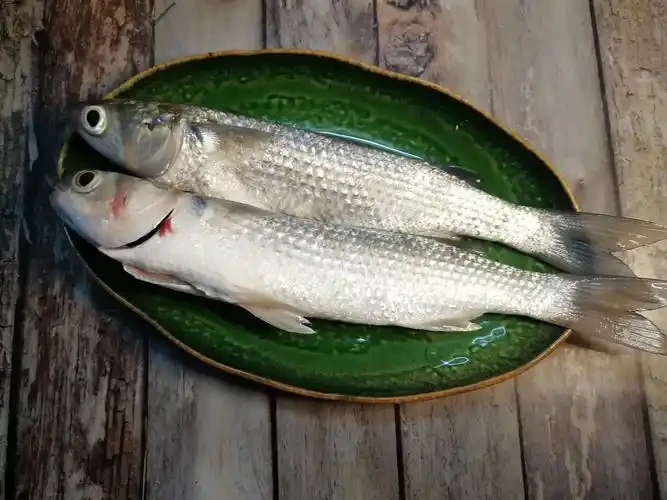
Mullet is a familiar economic fish to coastal residents. Covered in bluish-gray scales, its cylindrical body and laterally compressed tail create a unique streamlined shape. Its signature transparent fatty eyelids act like natural goggles, filtering strong light while maintaining clear vision, allowing it to peck at plankton above the water. Adults reach 20-40cm in length but are renowned for their amazing jumping ability, often giving fishermen the delightful experience of "fish leaping over boats."
Unlock the Secrets of Freshness
Coastal residents have developed diverse cooking methods: Mullet is at its fattest before the winter solstice, its belly round like a small pillow. The classic home-style cooking method requires mastering the art of heat control-sear ginger slices in hot oil until slightly browned, massage the fish with Shaoxing wine and a little salt, then lightly coat with cornstarch, pan-fry until golden brown, drizzle with cooking wine to enhance the aroma, add soy sauce, oyster sauce, and sugar to taste, and simmer for 15 minutes. The collagen-rich fish skin is considered the essence of the dish, easily paired with three bowls of white rice. For a lighter flavor, try the Yancheng stewing method: steam for 15 minutes and drizzle with sesame oil; the garlic-clove-like fish meat is exceptionally delicious.
The "Spleen-Strengthening Expert" of the Ocean
According to the Compendium of Materia Medica, it is neutral in nature and sweet in taste, possessing spleen-strengthening effects. Modern testing shows that its protein content surpasses that of chicken breast, its Omega-3 fatty acid content rivals that of salmon, and it contains only about 70 mg of cholesterol per 100 grams, making it suitable for people with high blood pressure, high cholesterol, and high blood sugar to consume in moderation. Of particular note is its zinc and selenium content, making it a natural supplement. The traditional fisherman's recipe for stewed mullet with winter melon has a diuretic and swelling-reducing effect comparable to red bean and barley soup.
Purchasing Guide
To identify mullet, master three key elements: bright red gills, a springy body, and clear eyes. Beware of mullet being passed off as mullet: mullet has well-developed white fatty eyelids (mullet only has thin fatty eyelids), a silvery-white ring around the pupil (mullet's iris is reddish-yellow), and a robust body with a wide tail fin (mullet has a slender, truncated tail fin). Farmed mullet has become increasingly popular in recent years. Its glossy black skin and firm flesh surpass those of wild varieties, and it lacks any muddy taste, making it more affordable.

Fun Fact: Mullet are survival masters, adapting to salinity levels of 3‰-38‰ and water temperatures of 3℃-35℃. Farmed mullet are not picky eaters, readily consuming wheat bran and peanut cakes, hence their affordable market price. Their migratory habits are a marine wonder: every year from September to October, they migrate en masse to the open sea to spawn, returning the following spring with their fry, creating a unique "seafood relay race."