


Why Do Fish Schools Follow Temperature?
Jul 14, 2026
Leave a message
Why Do Fish Schools Follow Temperature? - The "Law of Attraction" Behind Fishing Ground Formation
In most cases, specific water temperatures are a core factor in the formation of prime fishing grounds. This is primarily driven by several key physical oceanographic processes:
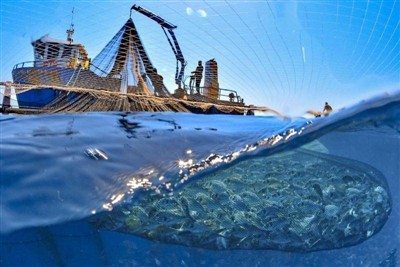
- Convergence of Cold and Warm Currents Creates a "Fish Wall":** Where ocean currents of different temperatures meet-known as a "convergence zone" or "oceanic front"-an invisible "water barrier" is formed. This "wall" confines fish species that prefer specific temperature ranges to a particular area, causing them to congregate densely and form a fishing ground. World-renowned fishing grounds such as those off Hokkaido, Newfoundland, and China's Zhoushan Islands were largely formed in this manner.
- Upwelling Zones Bring a "Bountiful Feast":** In upwelling zones, deep, cold, and nutrient-rich waters are brought to the surface. This triggers a massive proliferation of plankton, attracting schools of fish to feed and creating a fishing ground. The formation of the Zhoushan fishing ground is also linked to this mechanism.
- Every Fish Has a "Comfort Zone":** Different fish species have their own optimal temperature ranges. The location of fishing grounds shifts in tandem with the movement of these "comfort zones." For instance, the center of the Pacific mackerel fishery in the Northwest Pacific undergoes regular north-south migrations driven by seasonal temperature changes. Research also indicates distinct differences in temperature preferences among various Pacific salmon species, which directly influences their distribution.
The Challenge of Global Warming - The Impact of "Temperature Shifts"
However, when long-term changes in seawater temperature cross a critical threshold-resulting in a "temperature shift"-it poses immense challenges to the fishing industry; such changes are often destructive.
- Mass Fish Migration and Unstable Fishing Grounds:** Global warming is causing shifts in ocean temperatures that persist for a decade or longer. Over the past 150 years, the frequency and magnitude of these shifts have surged by 130% to 140%. This directly drives fish populations to migrate toward higher latitudes (colder waters), potentially causing traditional fishing grounds to shrink or disappear. For example, studies predict that if seawater temperatures continue to rise, the habitats of herring and cod near Scotland will shift significantly toward the north and east. This ecological stress caused by global warming is also considered a contributing factor to the decline in Pacific mackerel stocks in the Northwest Pacific.
- Ecosystem-wide ripple effects: Abrupt temperature shifts affect not only fish populations but also trigger drastic changes in factors such as dissolved oxygen levels and plankton abundance; the synchronization of these changes ranges from 21% to 46%. This implies that the entire food web is undergoing upheaval, ultimately manifesting as instability in fishery catch volumes. Research indicates that the frequency of abrupt fluctuations in catch volumes has risen by approximately 35% as a result.
Practical impact on fishing operations
These mechanisms directly influence the daily activities of fishermen and industry planning:
1."Chasing the fish" becomes the norm: Fishermen must increasingly rely on technologies like satellite remote sensing to monitor real-time sea surface temperature (SST) data. This allows them to locate thermal fronts or optimal temperature zones and pinpoint the primary fishing grounds.
2.Increased production cycles and costs: As fish migration routes and timing shift in response to water temperature changes, the start and end times of traditional fishing seasons (such as the winter hairtail season off the coast of Zhejiang) become unpredictable. The outward shift of fishing grounds may also necessitate better preservation equipment on vessels to accommodate longer voyages over greater distances.
3.Long-term planning must account for climate factors: For fishery managers and fishing enterprises, understanding the long-term migration trends of fish populations driven by global warming is crucial for formulating sustainable fishing strategies and assessing the future potential of fishing grounds.