


Striped Bonito
Nov 26, 2026
Leave a message
The Striped Bonito is a migratory marine fish found in the temperate and tropical waters of the Indo-Pacific region. It belongs to the genus *Sarda* within the family Scombridae (the tuna and mackerel family). Its most distinctive feature is a series of parallel dark longitudinal stripes along its back; in the fishing industry and marketplace, it is commonly referred to as "bonito."
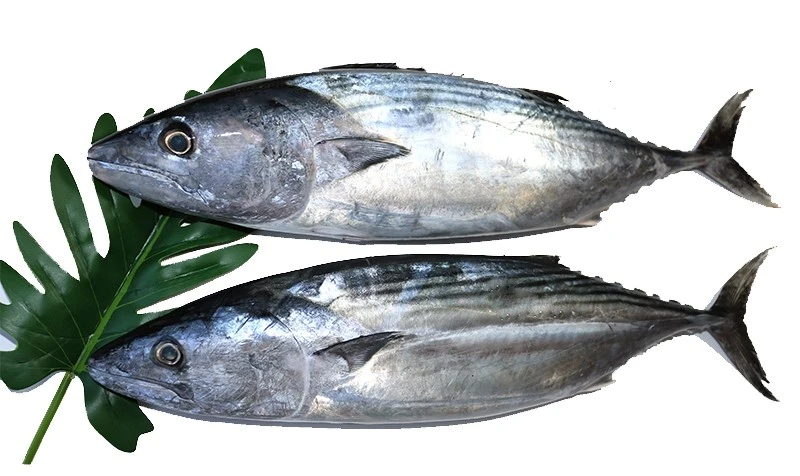
🐟 Morphological Characteristics
- Body Shape and Coloration: The body is spindle-shaped, with a bluish-green back and a silvery-white belly. Adult specimens typically reach a length of about 50 cm, though the maximum recorded length exceeds 1 meter, with weights reaching up to approximately 11 kg.
- Key Identifying Features: The back bears 6–7 (sometimes 6–8) nearly parallel, dark blue longitudinal stripes-a crucial characteristic that distinguishes it from other bonito species. The caudal peduncle (the narrow part of the body before the tail fin) is slender yet powerful, featuring a prominent lateral keel on each side, and the tail fin is crescent-shaped.
- Head and Dentition: The head is conical with a blunt, elongated snout. The mouth is large, with a single row of strong, sharp teeth on both jaws; the lower jaw is particularly robust.
🌊 Distribution and Habits
- Distribution: Widely distributed across the temperate and tropical waters of the Indian and Pacific Oceans. It is commonly found in waters south of northeastern Japan, and in my country, it is primarily harvested in the South China Sea and the East China Sea.
- Habitat: As a warm-water, pelagic (mid-to-upper water column) species, it often migrates in schools through coastal surface waters. It typically inhabits depths of 1–30 meters and is also frequently found around islands.
- Diet: It is a carnivorous, relatively aggressive predator capable of high-speed swimming. Its diet consists primarily of small fish (such as sardines), cephalopods, and crustaceans.
🍽️ Utilization and Nutrition
- Fishery Value: It is an economically important food fish, typically caught using methods such as longlining or drift gillnetting. It is most commonly sold fresh, though it is also available frozen, canned, or as a dried, salted product.
- Flesh and Nutrition: When fresh, the meat is tender and possesses a delicious flavor. Nutritional analysis reveals a high crude protein content in the dorsal muscle; with an essential amino acid mass fraction of 35.10% and an essential amino acid index of 0.90-both slightly superior to those of the other skipjack tuna varieties compared-it serves as an excellent source of high-quality protein.