


The World's Four Major Fishing Grounds
Jan 28, 2026
Leave a message
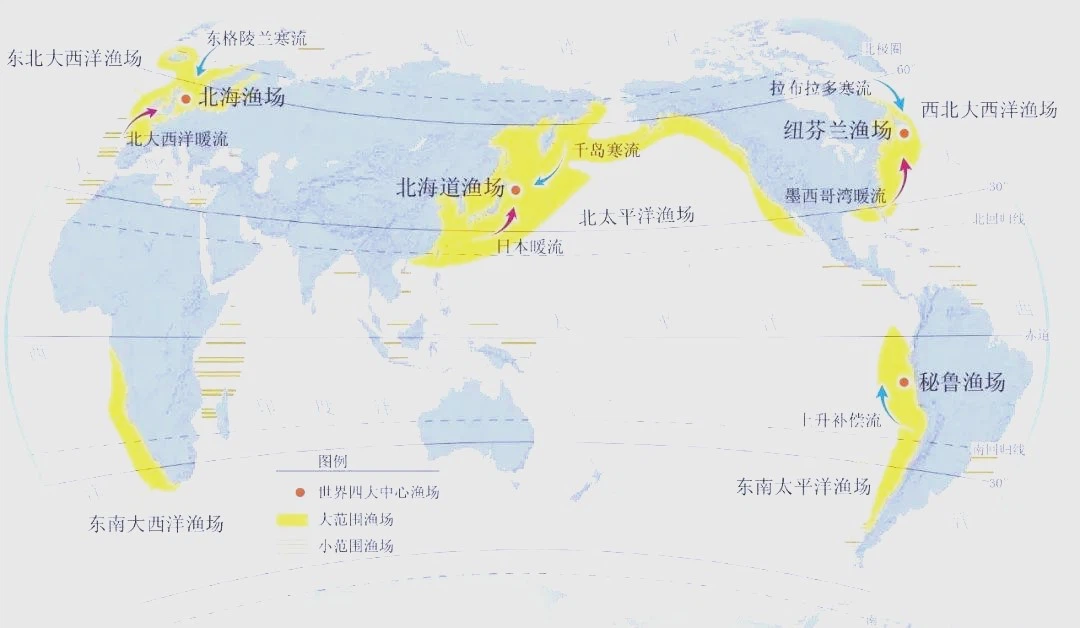
Hokkaido Fishing Ground: Located in the North Pacific Ocean southeast of Hokkaido, Japan, formed by the confluence of the Japan Current and the Kuril Current. This convergence disturbs the seawater, bringing nutrients deposited on the seabed to the surface and promoting the proliferation of plankton, providing ample food for fish. Major fish species include salmon, pollock, Pacific herring, Far Eastern sardines, and saury.
Newfoundland Fishing Ground: Located in the Atlantic Ocean southeast of Canada, off the coast of Newfoundland, formed by the confluence of the Gulf Stream and the Labrador Current. This area was once one of the world's richest fishing grounds, with cod as the main catch, along with capelin and Atlantic halibut. However, due to centuries of overfishing, especially the operations of large mechanized trawlers in the 1950s and 60s, the Newfoundland Fishing Ground gradually disappeared after the 1990s.
North Sea Fishing Grounds: Located in northwestern Europe, in the North Sea between Great Britain, the Scandinavian Peninsula, and mainland Europe, this fishing ground is formed by the confluence of the North Atlantic Current and the southward flow of cold water from the Arctic Ocean. It is a shallow fishing ground with an average depth of only 96 meters, allowing sunlight to easily penetrate the seawater and reach the seabed, promoting the growth of seaweed and algae and providing habitats and spawning grounds for fish. Major catches include cod, herring, capelin, flounder, and sardines.
Peruvian Fishing Grounds: Located off the coast of Peru in the eastern Pacific Ocean, this fishing ground is formed by the upwelling of the Peru Current. The Peruvian coast experiences prevailing offshore winds-the southeast trade winds-which draw seawater from the shore into the deeper ocean. The upwelling of cold seawater from the ocean floor replenishes the surface, bringing large amounts of phosphates and silicates, which become food for plankton. This proliferation of plankton attracts large numbers of fish, including the Peruvian anchovy, as well as cod, tuna, sardines, and squid.