


What factors affect squid catch?
Jul 24, 2025
Leave a message
Natural environmental factors
- Water temperature changes:
Squid are sensitive to water temperature, especially oceanic species (such as Argentine squid and Pacific frigate squid). When climate phenomena such as El Nino or La Nina cause abnormal water temperatures, their migration paths or aggregation areas may change, affecting the catch.
- Ocean currents:
Ocean currents affect the spread of squid larvae and the aggregation of adults. For example, the confluence of the Kuroshio and Oyashio (around Japan) often forms a high-yield fishing ground.
- Abundance of prey:
The reduction of prey such as plankton and small fish will cause squid to grow slowly or migrate, indirectly affecting the catch.
- Salinity and dissolved oxygen:
Nearshore squid may migrate due to changes in estuary salinity or the expansion of low-oxygen zones.
Climate and seasonal factors
- Moon phase and light:
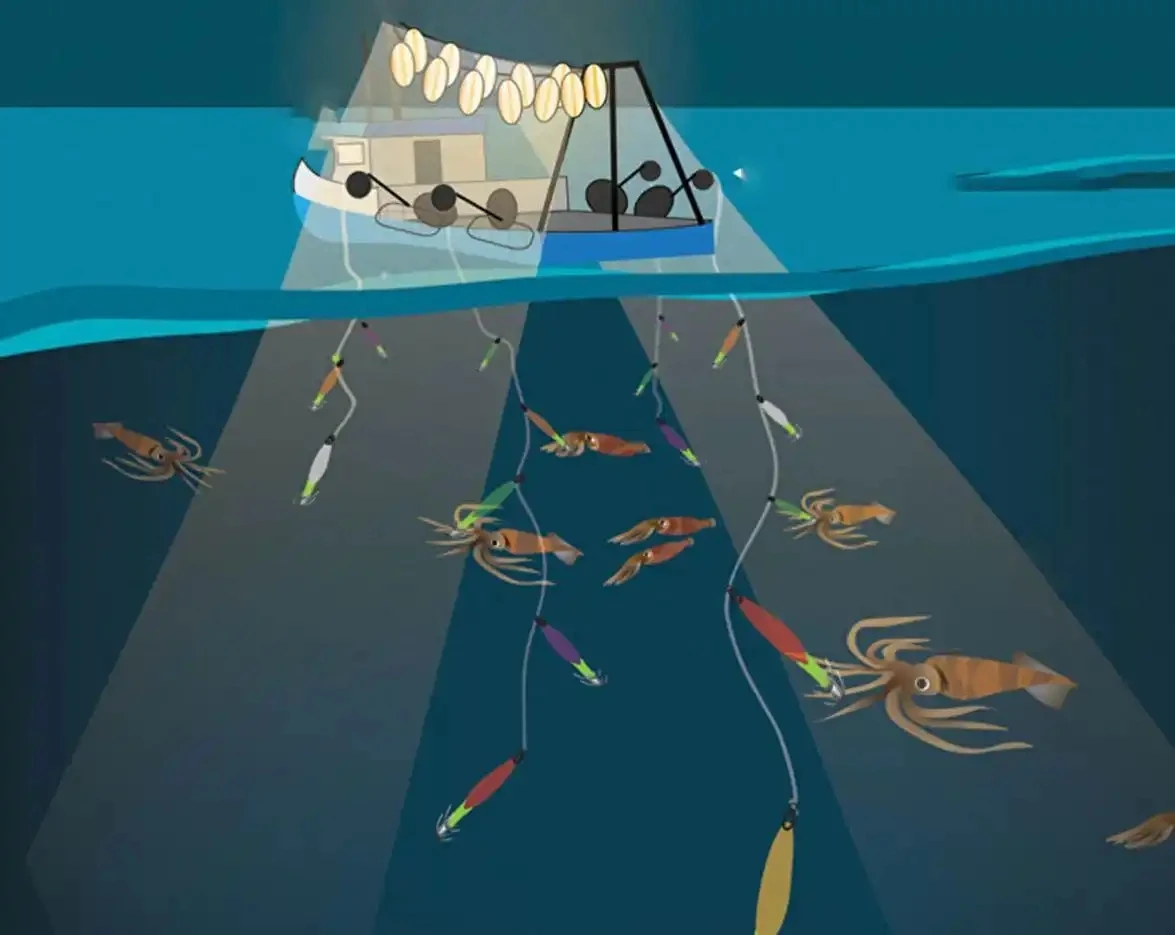
Squids are phototactic, and the lunar phase cycle (new moon/full moon) affects their vertical movement and the effect of light fishing boats. For example, squid fishing boats in the Sea of Japan often increase production in the dark night.
- Seasonal migration:
Most squid species have clear seasonal migration (such as north in summer and south in winter), and missing the peak period will lead to reduced production.
Fisheries management and human activities
- Fishing intensity:
Overfishing leads to resource decline, such as the fluctuation of the production of Peruvian squid due to disorderly fishing.
- Fishing policy:
Quota system, fishing ban (such as China's East China Sea fishing ban), license restrictions, etc. directly affect the catch.
- Light trapping technology:
Efficient fish-attracting lights (popularization of LED lights) may increase the production of a single vessel in the short term, but may increase resource pressure in the long term.
- Illegal fishing (IUU):
Unreported fishing activities will distort resource assessments and lead to management failures.

Other unexpected factors
- Marine pollution:
Plastic particles, oil pollution, etc. may destroy squid habitats.
- Extreme events:
Disasters such as typhoons and red tides can force fishing boats to stop sailing or cause large-scale deaths of squid.